04. The block I’d only driven past: a walk through Teofilów
Stepping out of the car
The first thing was the scale. From the driver's seat, the blocks read as backdrop, flat, decorative almost. On foot, they were buildings. Eight, ten storeys of concrete standing directly above me, grey on grey on grey. I could see the streaks where decades of rain had worked down the panels. I could see the laundry on the balconies. I could see, more than anything, how quiet it was.
I had not chosen Teofilów because it was photogenic. It isn't. The Łódź guidebooks do not send you here. The prefabricated blocks of the 1960s and 70s are not what anyone calls beautiful, and they have not aged into something that retroactively becomes beautiful. They are simply there, and a hundred thousand people live among them.
The first thing that made me stop was a caravan.
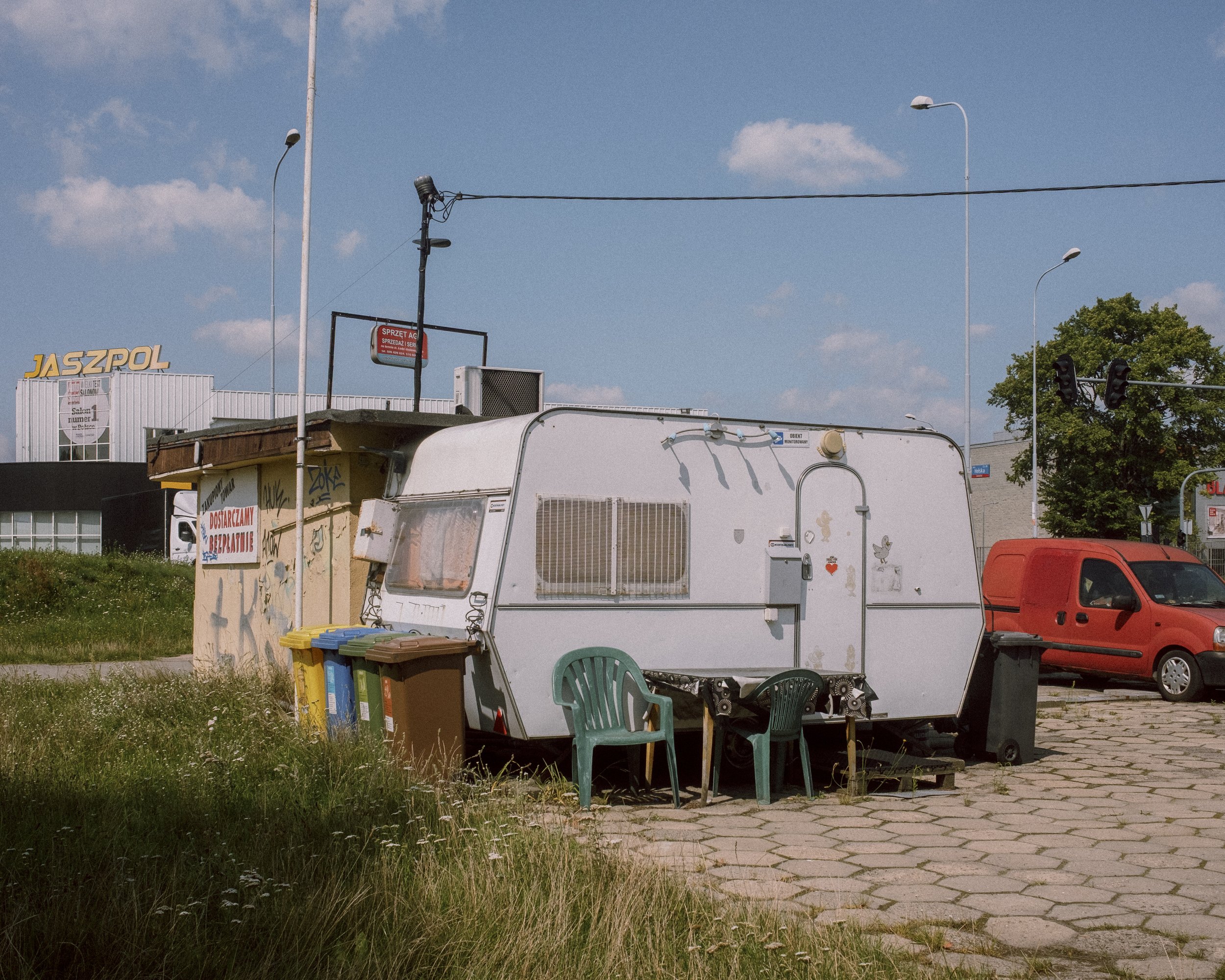
It was squeezed between a graffitied kiosk and a patch of overgrown grass, two green plastic chairs set out in front of it as if someone had been sitting there an hour ago and might come back. The caravan had small stickers on the door, a duck, a heart, something cartoonish I couldn’t read from the street. Behind it, a Jaszpol sign rose on the horizon, the sort of sign that exists to be read from a car at speed. None of it added up to anything.
I had no plan. I had a camera and two hours. I started walking.
The first hour
I walked without a route. Most balconies were empty. A few held drying laundy, few held bycicles, one held a single white plastic chair angled toward the street as if its owner had spent yesterday afternoon there and might tomorrow.
The first thing I made myself do was to look without raising the camera. This is harder than it sounds. The camera is a way of deciding if a thing is worth attention; walking without it, forces you to admit that almost nothing has yet announced itself. For maybe twenty minutes I just looked, and the looking produced very little.
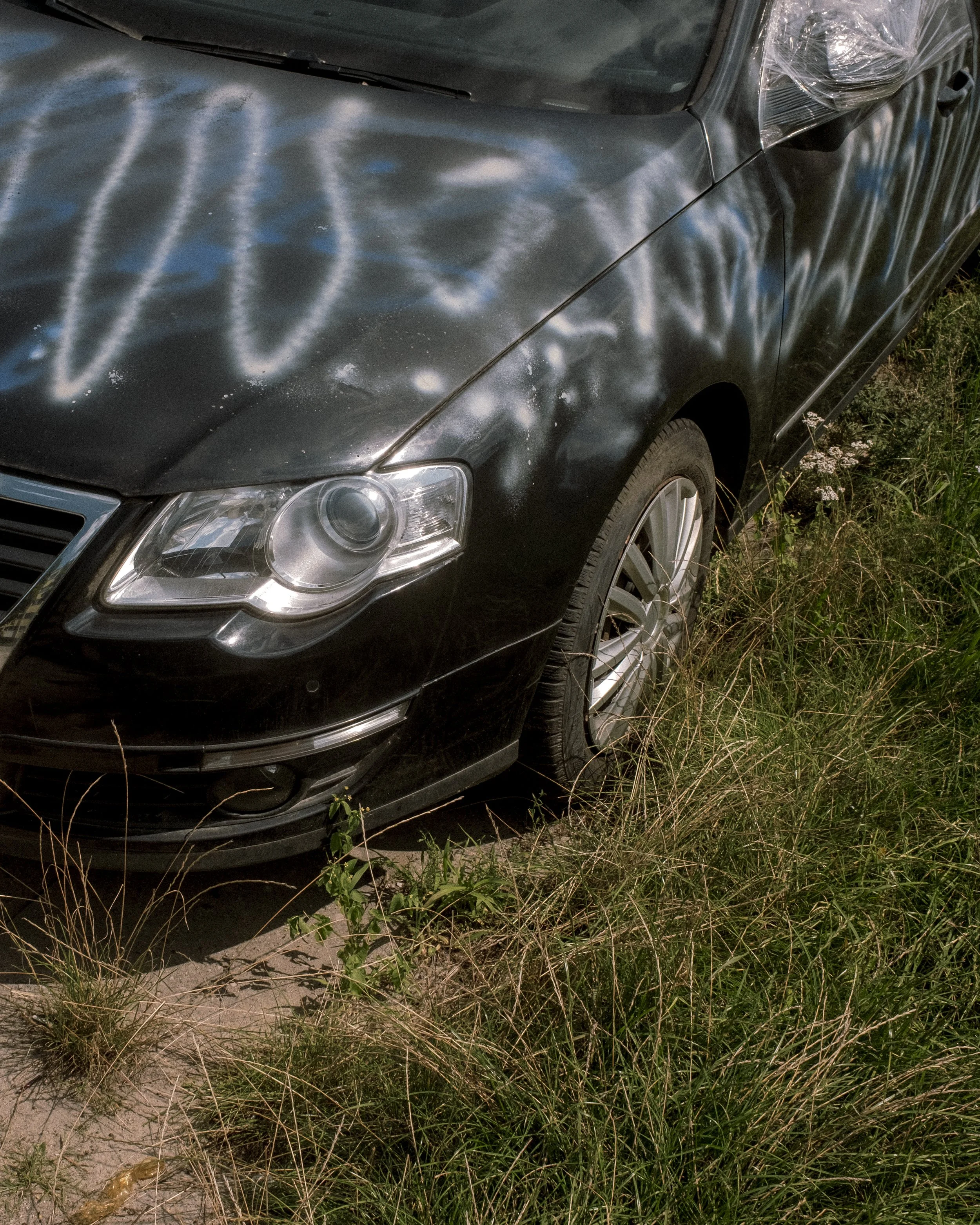
A black Volkswagen Passat parked at the edge of a path, its bonnet tagged in white and blue spray paint. The grass had grown up to the wheel arches. The car wasn't abandoned, exactly. Someone owned it. Someone, presumably, drove it.
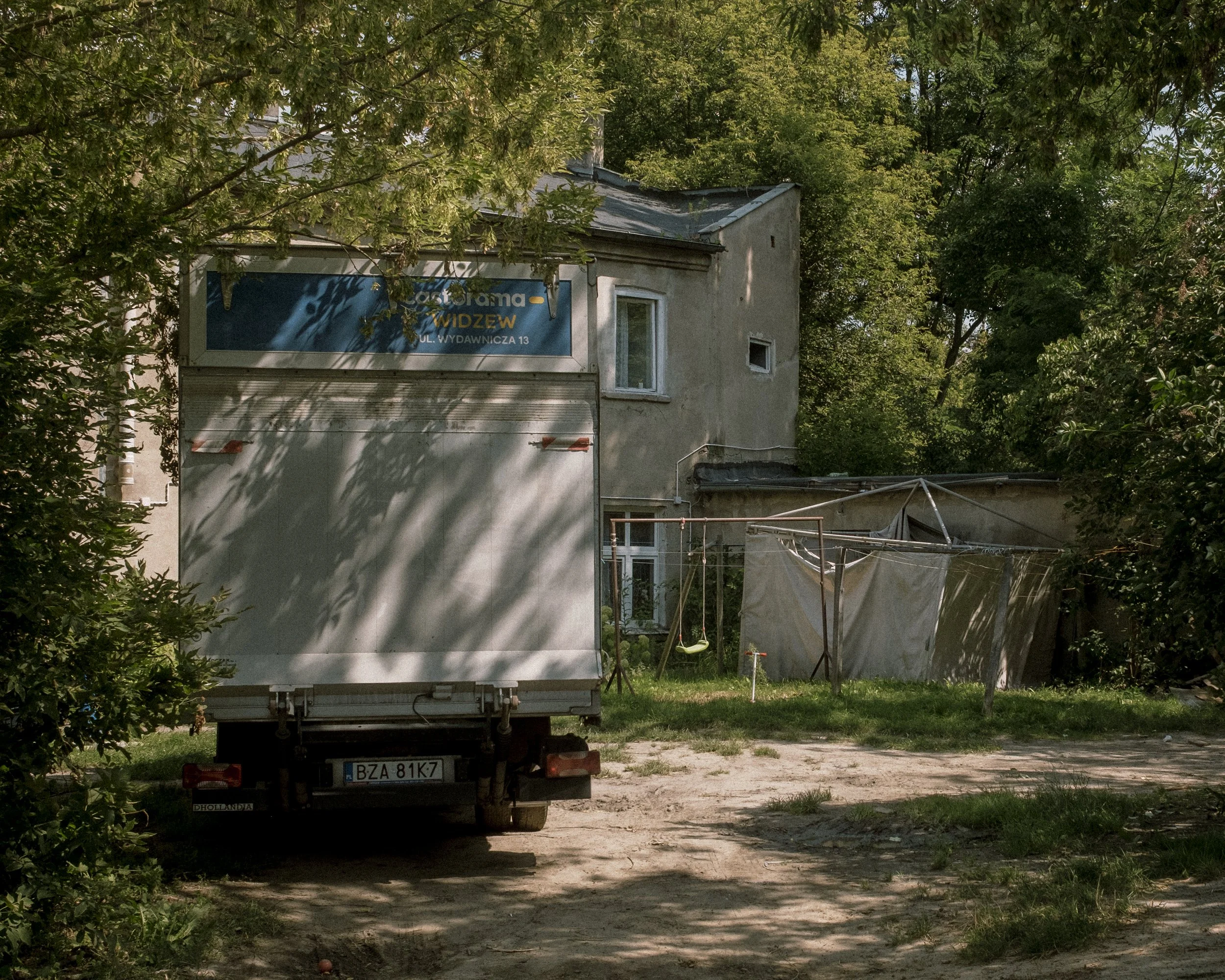
A few streets later, a delivery truck parked in what was clearly someone's backyard. Behind it, a small two-storey house, a peeling facade, and a child’s swing hanging from a metal frame.
These were the kinds of arrangements that started to teach me what I was looking at. Not bleakness. Not picturesque decay. Something else, places that had been used, being used, would be used, but never quite finished. Lives improvised around the architecture rather than into it.
The things I kept noticing
By the second hour, I had stopped trying to find subjects. I was just walking, and I was starting to take photographs without thinking about it. And as I made them, something began to repeat.
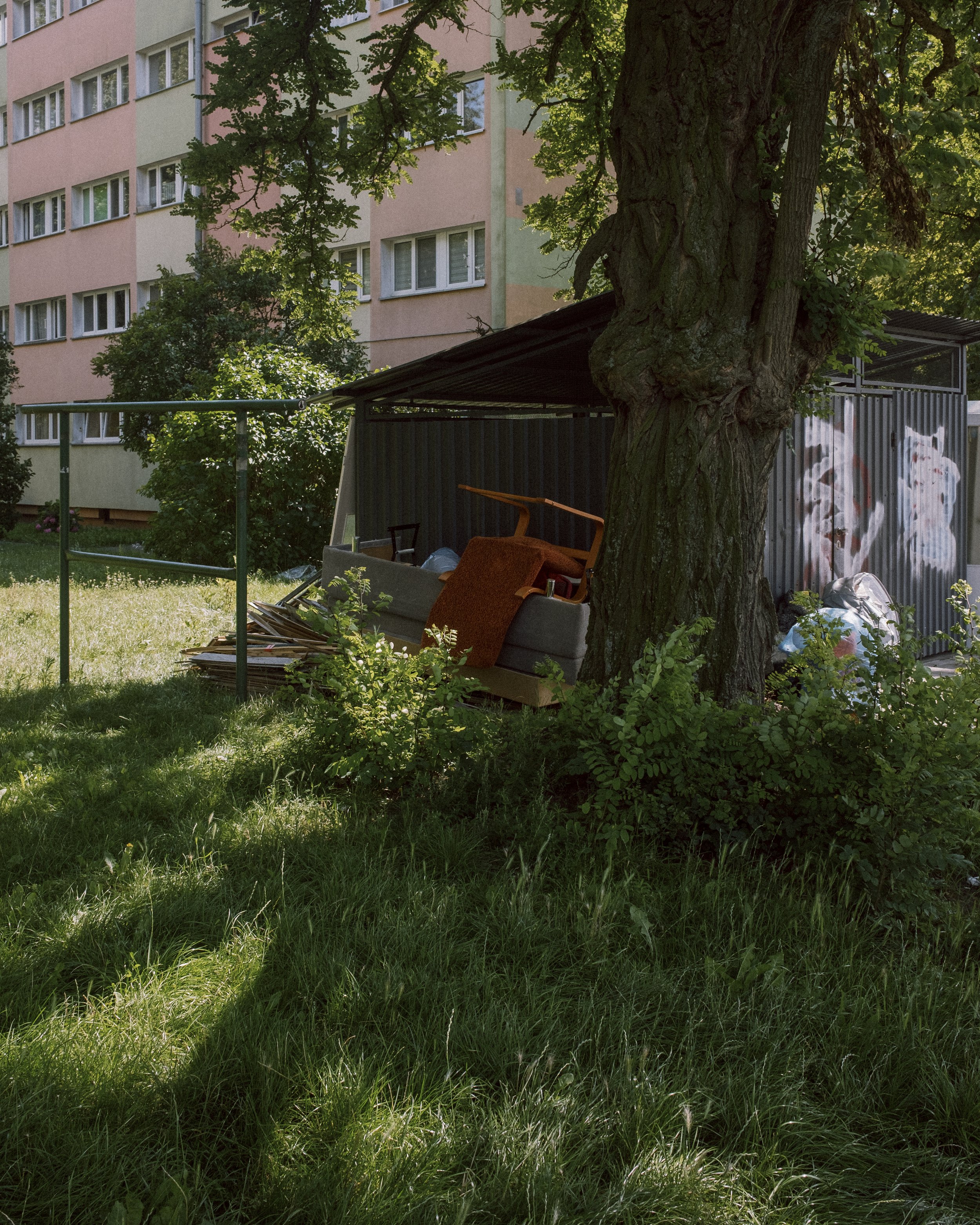
A sofa had been dumped under a tree. Below it, the slats of a broken-down wardrone stacked against a bin shelter. Behind all of it, one of the blocks had been repainted in pastel, pale pink, pale green.
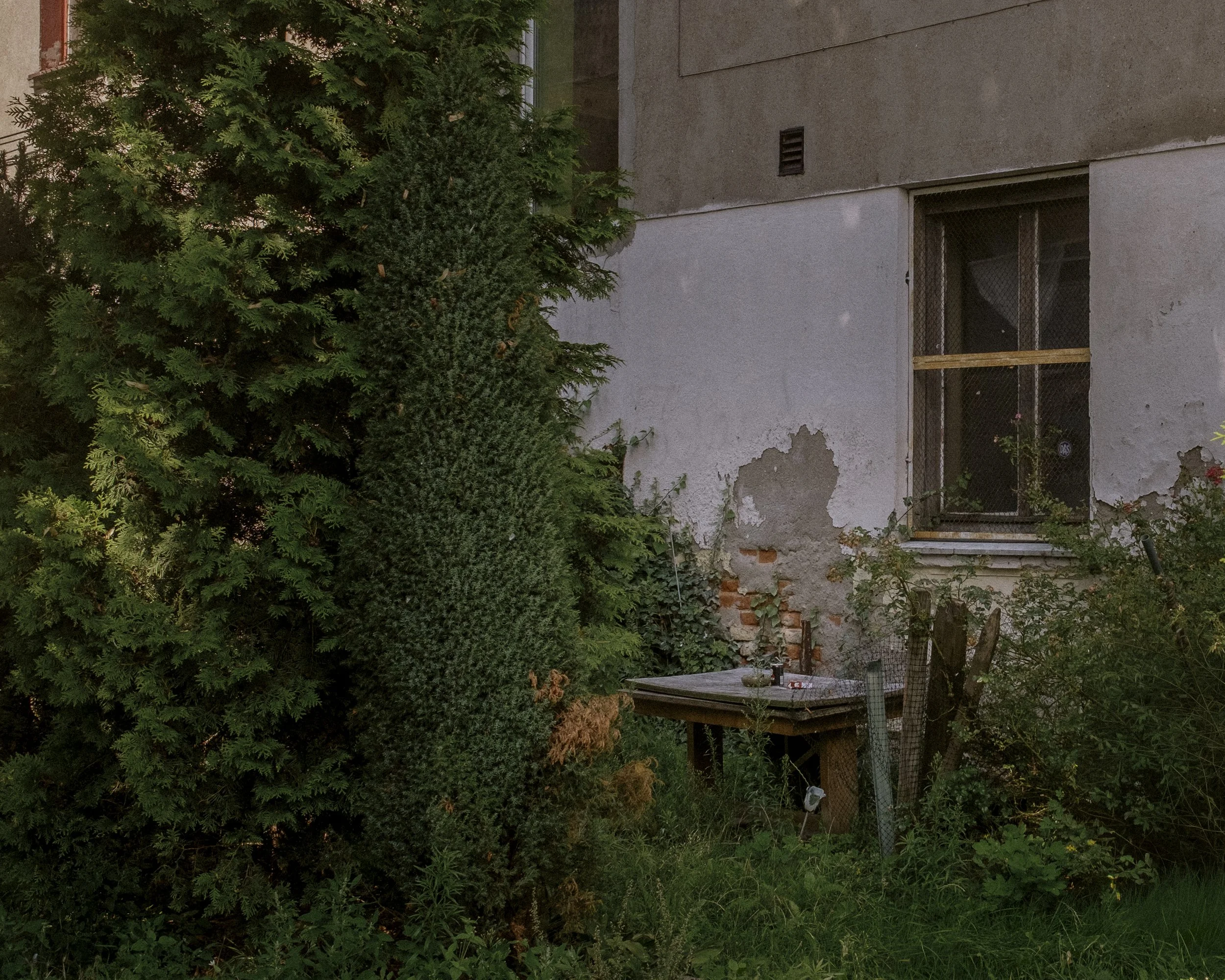
A few streets later, the same thing again, in a different key. The back of a low building, brick showing through, a window covered in wire mesh. Set against it, a small table with what looked like a coffe cup and cigarettes left, half-hidden by bushes and trees that had grown right up against the wall.
Teofilów was not bleak and was not secretly beautiful. It was a place where concrete and green had been in slow negotiation for many years, and the negotiation was the subject.
Walking back to the car
I had been walking for nearly two hours when I started moving back toward the parking spot. Not because I was finished, but because I knew I had what I came for, and the rest would be greed.
The walk back was different from the walk in. I had arrived as someone who had only driven through Teofilów. I was leaving as someone who had, at least once, stood in it.
The blocks looked the same. The streets were the same streets. But I knew now where the dumped sofa was. I knew where the Passat was settling into its grass. I knew that the Castorama truck would probably be parked in that same yard tomorrow, and the swing would still be hanging beside it. The district had become specific.
I got back to the car. I drove home through the same district I had walked. What changed in two hours was not the district. What changed was me.
